Thunder was signed by Capitol Records in the 1970s and recorded the single "Expressway to Your Heart". Perry, Thunder and Jones were all friends and students at Madison Park High School, a school in Roxbury, Massachusetts. The trio were all in the same music class in the school. As a trio, the members performed on street corners and at Boston Common. Eventually, they answered an advertisement in the Boston Phoenix and began performing in clubs under the name Margo Thunder and Intrigue. Perry, Thunder and Jones were backing vocalists for Joe Frazier. Eventually, their debut album 9.9 was released in Summer 1985.
9.9's album reached #79 on the U.S. Billboard 200 and #15 on the Top R&B/Hip-Hop Albums chart.[2] 9.9 released a second single titled "I Like the Way You Dance." The group performed on Soul Train, American Bandstand, and Solid Gold.[3] They also provided backing vocals for a single with Patti LaBelle titled "Shy". The group continued until 1987, when disputes over material, production and personal matters forced the group to disband. Leslie Jones died on July 5, 2013; she was survived by two children and four grandchildren. Wanda Perry is married with two children. She is also a minister and has recorded several gospel albums available on iTunes. Margo Thunder formed a female group named Lady Soul, which recorded a song and video for the Sister Act soundtrack titled "If My Sisters in Trouble".[3] Margo is recording as a solo act and released a single titled "Mistreated".


Central Line, comprising Lipson Francis, Henry Defoe, Linton Beckles and Camelle Hinds, formed in London in April 1978. The line-up drew mostly from the defunct East London band TFB (Typical Funk Band), other members of which were drummer Errol Kennedy, later of Imagination, and trumpeter Kenny Wellington, later of Light of the World.[1] The group's first single, "What We Got (It's Hot)", showcased a lively R&B-based dance sound, and led to the group touring with The Real Thing, Roy Ayers and Grover Washington Jr. Nonetheless, follow-up single "Sticks & Stones" flopped and the band altered their musical style for their February 1981 single "(You Know) You Can Do It", which became their first UK hit.[1] With these singles, the group became pioneers of the early 1980s Britfunk sound,[1] alongside Imagination, Light of the World and other groups.[2]
Central Line recorded Breaking Point in June and October 1981 at Scorpio Studios, Audio International Studios and London's Nova Sound Studios.[3] The band recorded with producer Roy Carter, formerly of Heatwave, who also remixed "(You Know) You Can Do It" for the album, which had originally been produced by Bob Carter,[3] The album was mixed at Utopia Studios by Greg Walsh, Pete Smith and Pete Walsh; Smith was also present for the recording.[3] In a contemporary interview with Brian Chin of Billboard, Beckles described the sounds of Central Line and their British contemporaries as an advancement on late 1970s British jazz-funk and said of the group's inspiration: "We're trying to establish something from the hearts and minds of blacks in England, how they feel about music and life. It's a very recent development: we're old enough to know our own direction.
As with the group's British soul contemporaries Light of the World and Hi-Tension, the record exemplifies a style of synth-funk that is fused with an English-styled sensibility with dub characteristics.[5] Writers vary between songs, with Beckles and Francis credited as contributing most.[3] "Walking Into Sunshine" features lyrics of escapist yearning; writer Paul Lester wrote that, released as a single in summer 1981 in the aftermath of the riots in Brixton and Toxteth, the "seemingly innocuous" lyrics "captured the dispirited mood of the moment" with lines like "I can't stand it, this kind of life is not for me... I gotta get away."[6] The version on the album is longer than the single mix, running to five minutes.[7] Beckles said the song used "spiritual approach to writing", with its central metaphor a deliberately "ambigious [sic] term to relate to. Achievement is walking into sunshine."[4] "Don't Tell Me", which was issued as the follow-up single, is funkier in comparison,[7] while the title track is a "jazzily bounding" instrumental that interlays guitar, bass and keyboards and which increases its tempo after an 118bpm intro.[8] James Hamilton of Record Mirror compared "I Need Your Love", with its "doodling" intro, to the work of Chic, while comparing "That's No Way to Treat My Love", with its faster tempo of 128bpm, to a fusion of Eddy Grant and Change.
In the United Kingdom, Breaking Point was released by Mercury Records in February 1982 and was promoted in both trade and consumer press.[10] The record spent five weeks on the UK Albums Chart, entering in February and peaking in its third week at number 64,[11] and also topped the Record Business Disco Album charts.[12] In the United States, the album was released as Central Line a month earlier on 9 January 1982;[13] this version had different artwork and a shorter track listing, with "(You Know) You Can Do It" removed and a longer version of "Breaking Point" replacing the original.[13][9] The album entered the Billboard Top LPs & Tapes chart at number 174 in mid-January,[14] and peaked at number 145 in early February.[15][16][17]
On the UK Singles Chart, "Walking Into Sunshine" entered in August 1981 and peaked at number 42 whilst "Don't Tell Me" entered in January 1982 and peaked at number 55.[11] "Walking Into Sunshine" was the band's biggest US hit, reaching number 14 on the Hot Soul Singles chart,[18] and number 84 on the Billboard Hot 100.[19] A remix by Larry Levan became a popular club record in New York City in 1981, where "R&B" was becoming the favoured descriptor of the producer's music over "disco"; writer Tim Lawrence wrote that the record "contributed to the growing impression that disco had never been more than a marketing term for a historically rooted sound."[20] The track was also popular at The Loft where it was played by DJ David Mancuso,[21] and Central Line played live at Paradise Garage – the nightclub where Levan was a resident DJ – alongside acts like Junior, Stephanie Mills and Cheryl Lynn.[22] Early in 1982, Record Business described Central Line as becoming "the first British funk band to make inroads in America.
 |
|
|
|
|


Tyrone Fettson was born in Greenville, Mississippi, United States,[4] to Willie Branch and Ora Lee Jones. Some sources give his date of birth as May 4, 1938, but researchers Bob Eagle and Eric LeBlanc state that his funeral notice gives the October 1937 date.[3]
He moved with his father to Saginaw, Michigan, before moving to Chicago in 1959. Working as a valet/chauffeur for blues singer Freddie King, he started singing in local clubs where he was discovered by record executive/musician Harold Burrage.[4] His early records for small record labels in the city, billed as "Tyrone the Wonder Boy",[5] failed to register.[4] Successful Chicago record producer Carl Davis signed him in 1968 to a new label, Dakar Records, that he was starting as part of a distribution deal with Atlantic, and suggested that Tyrone change his name, which he did by borrowing Carl's last name.


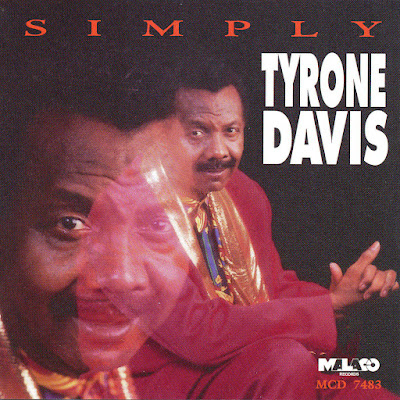
1982 brought a change of label to the newly established independent, Highrise and another major hit, "Are You Serious" (number 3 R&B, number 57 pop), again produced by Leo Graham, and written by L.V. Johnson.[9] When Highrise closed the following year, Davis switched to a tiny Los Angeles label, Ocean Front, which lacked promotional muscle to get behind arguably one of his best performances, "Let Me Be Your Pacifier." In 1991, Davis switched to Atlanta label, Ichiban Records, recording three albums including the song "Mom's Apple Pie." In 1994, Davis went to Bellmark/Life Records for one album. Davis' days as a major chart act were over, but he continued to be a popular live attraction and finally signed in 1996 with Malaco Records, the southern-based blues label recording him on a number of albums. He also performed on a PBS special on 1970s soul music in 2004, singing "Turn Back the Hands of Time."
A stroke in September 2004 ended his career and, following complications, he died in a Chicago hospital on February 9, 2005, at the age of 67.


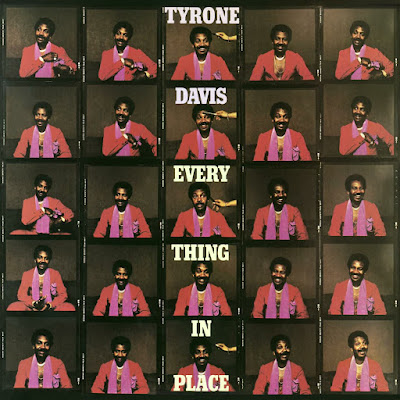
One single were released from the album. A cover of the Marvin Gaye classic "How Sweet It Is (To Be Loved by You)", which reached No. 36 on the Billboard Hot Soul Singles chart in 1980.

Two singles were released from the album. "Be with You", which reached No. 37 on the Billboard Hot Soul Singles chart in 1979, and the title track, which peaked at No. 58 on the same chart in 1980.

The album's lead single, "In the Mood", peaked at No. 6 on the Billboard Hot Soul Singles chart. The follow-up, "Ain't Nothing I Can Do", reached No. 72 on the soul singles chart.

It was his third Columbia Records release.
Two singles were released. The lead single, "Get On Up (Disco)", reached No. 12 on the Billboard Hot Soul Singles chart, while the follow-up, "Can't Help But Say", peaked at No. 65 on the same chart.

The album's lead single, "This I Swear", reached No. 6 on the Billboard Hot Soul Singles chart, while the follow-up, "All You Got", peaked at No. 32 on the same chart.

Love and Touch marked the beginning of the collaboration between producer Leo Graham and Tyrone Davis. Singles released include, "Give It Up (Turn It Loose)", which peaked at No. 2 on the Billboard Hot Soul Singles chart and No. 39 on the Billboard Hot 100, and "Close to You", which reached No. 33 on the soul singles chart.

Primarily produced by Leo Graham with the exception of two songs ("Saving My Love for You" and "Turn Back the Hands of Time"), which were handled by Carl Davis and Tom Tom 84. "Turning Point" was the album's lead single and reached No. 1 on the Billboard Hot Soul Singles chart in February 1976. It was the first number-one soul single to not crossover to the Hot 100 and any Billboard pop singles chart since 1955.[2] It was Davis's last number-one soul/R&B hit. Two follow ups, "It's So Good (To Be Home with You)" and "Ever Lovin' Girl", peaked at Nos. 9 and 39, respectfully, on the soul singles chart.